
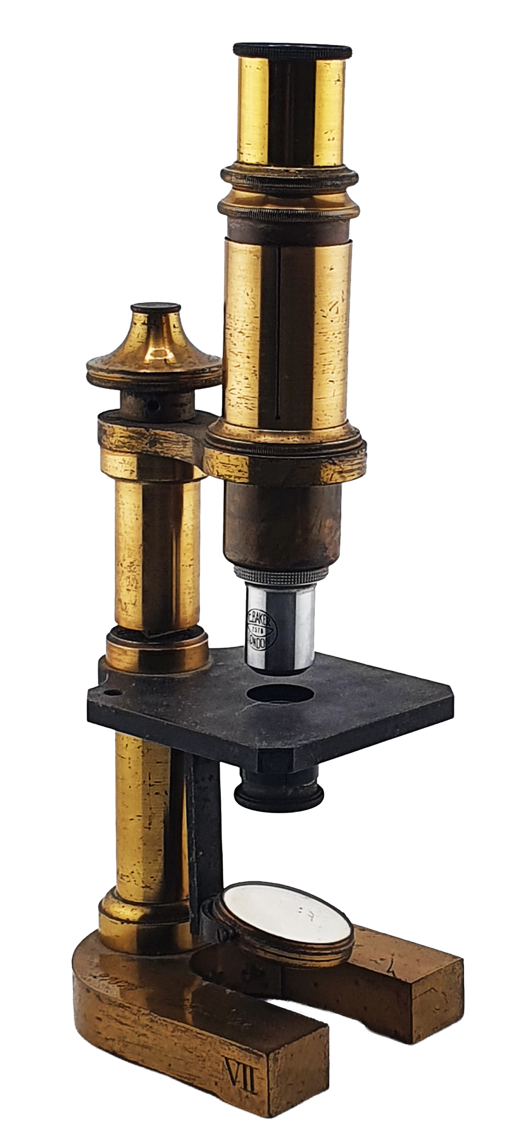
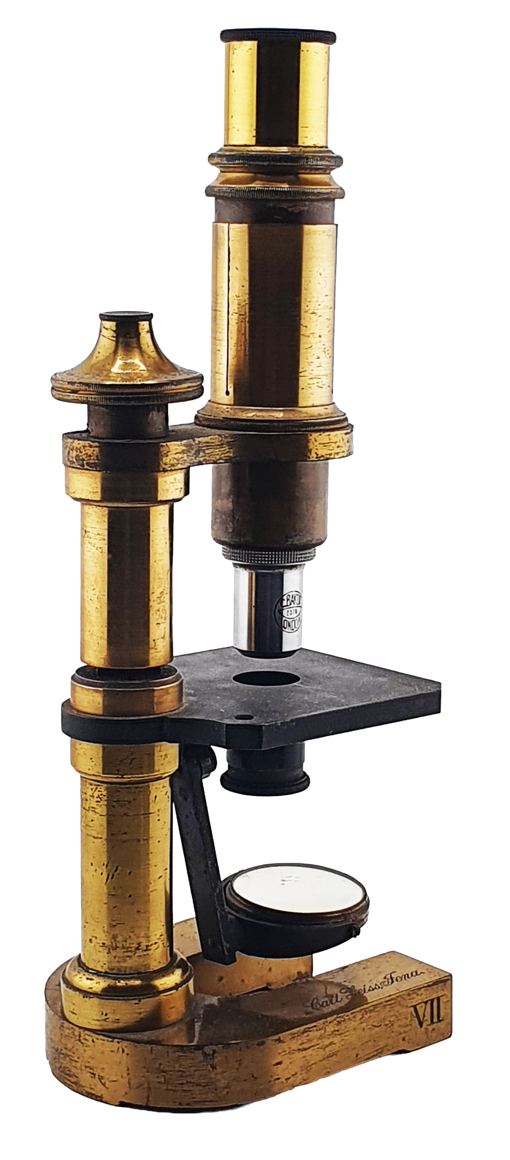
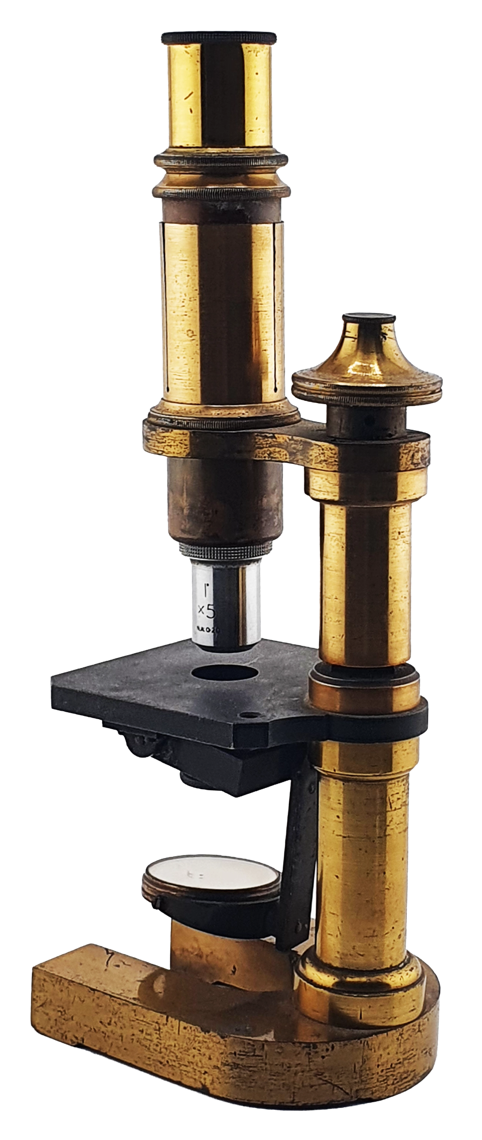
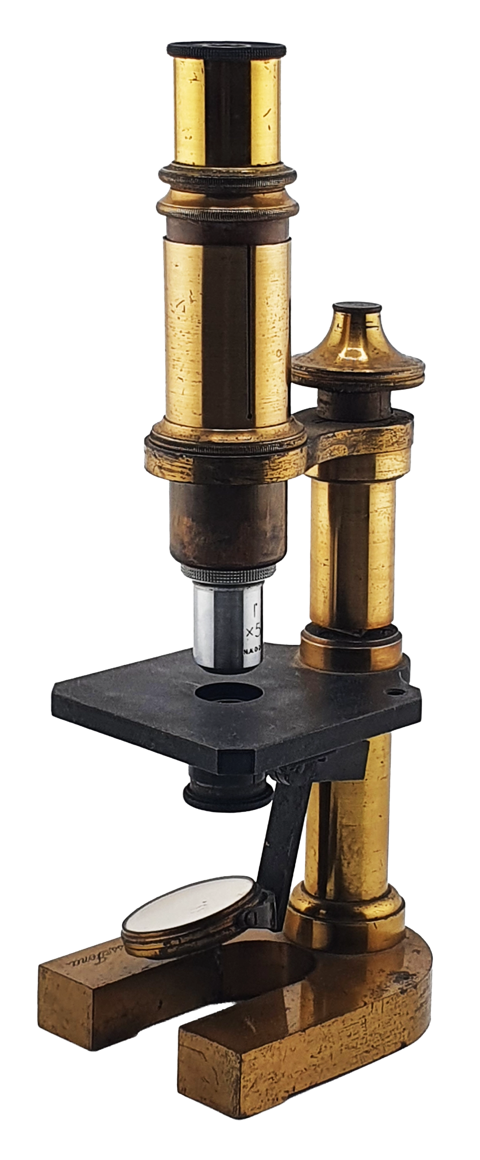
Microscope 669
(Carl Zeiss; microscope stand VII; c. 1896)
Carl Zeiss established a workshop for precision mechanics and optical instruments in Jena in 1846. He gradually focused his activities on microscope production, soon expanding beyond the regional market to supply instruments internationally. In 1866, he recruited the physicist Ernst Abbe to help improve the design and performance of his microscopes, and Abbe became a partner in the company in 1877. Following Carl Zeiss’s death in 1888, Abbe established the Carl Zeiss Foundation in 1889, which eventually became the company’s sole owner. From the 1890s onwards, Abbe’s scientific findings and approach to industrial research were applied increasingly to other areas of optics. This enabled the development of new products, the expansion into new business areas, and rapid corporate growth. The company opened its first subsidiary in London in 1893 and established further operations internationally before the outbreak of the First World War. However, these overseas operations were forced to close following the outbreak of war. The company subsequently experienced further periods of disruption and change before 1945. After the Second World War, its international operations gradually developed, and Carl Zeiss AG evolved into a holding company overseeing several subsidiaries. In addition to its sites in Oberkochen and Jena, its principal production facilities today include locations in Wetzlar and Göttingen in Germany, Dublin and Minneapolis in the United States, and Shanghai in China.
Microscope 669 bears the engraving ‘Carl Zeiss Jena’ and the serial number ‘27875’ on its foot. The instrument dates from approximately 1896 and can be identified as a Stand VII, a designation also engraved on the foot. This identification is confirmed by a comparison with the 1902 Carl Zeiss catalogue (Figure 1).
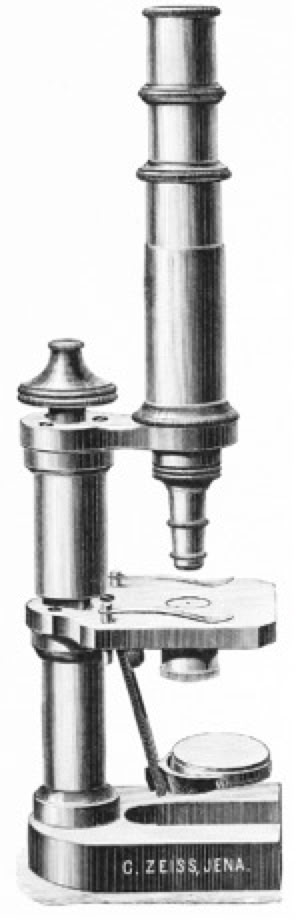
Figure 1. Carl Zeiss’s stand VII microscope as engraved in the company’s 1902 catalogue n. 32.