
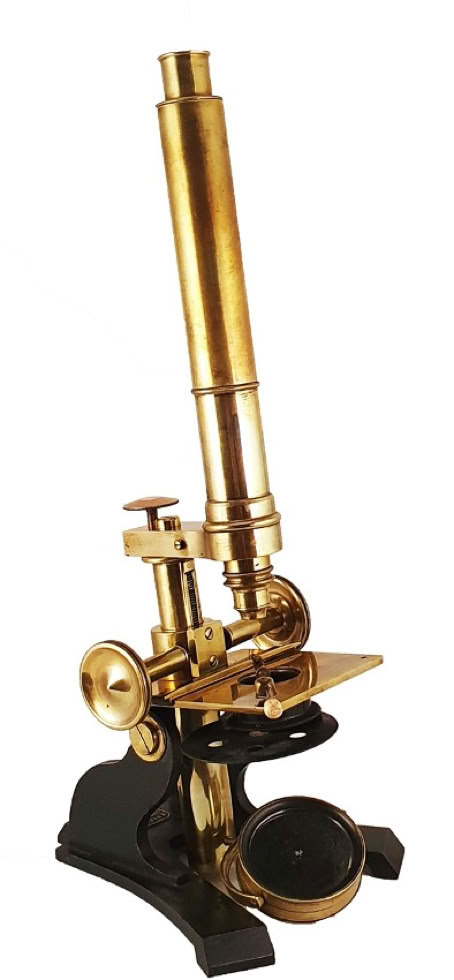
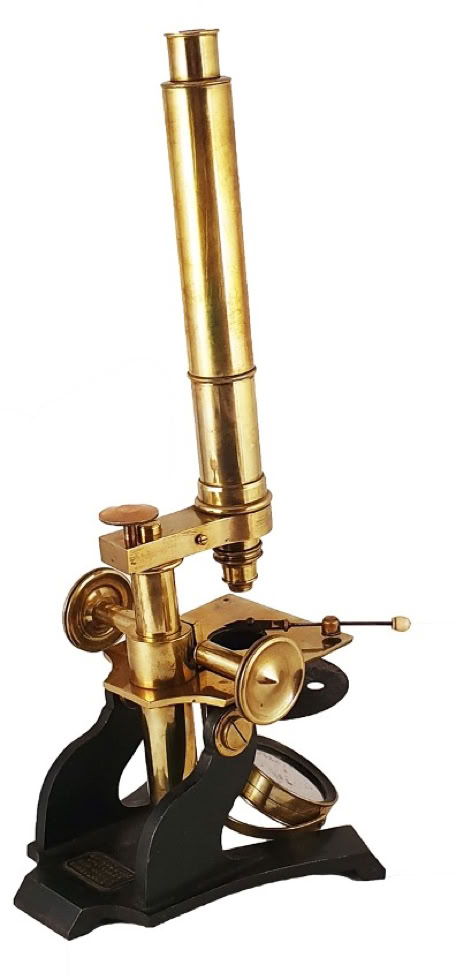
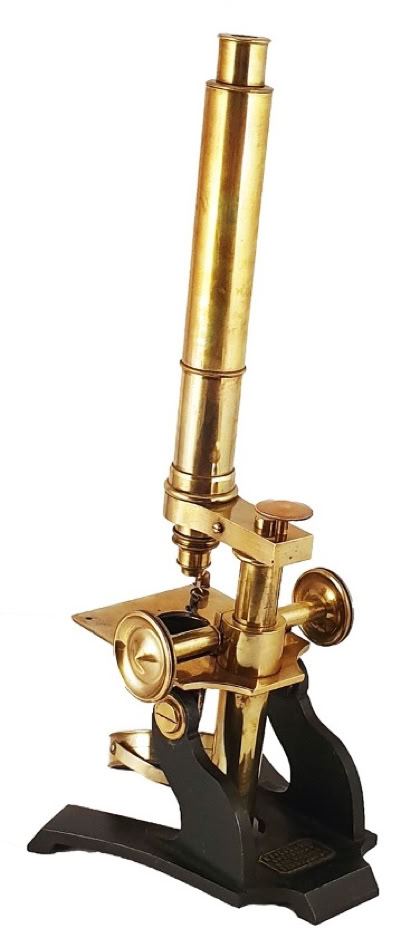
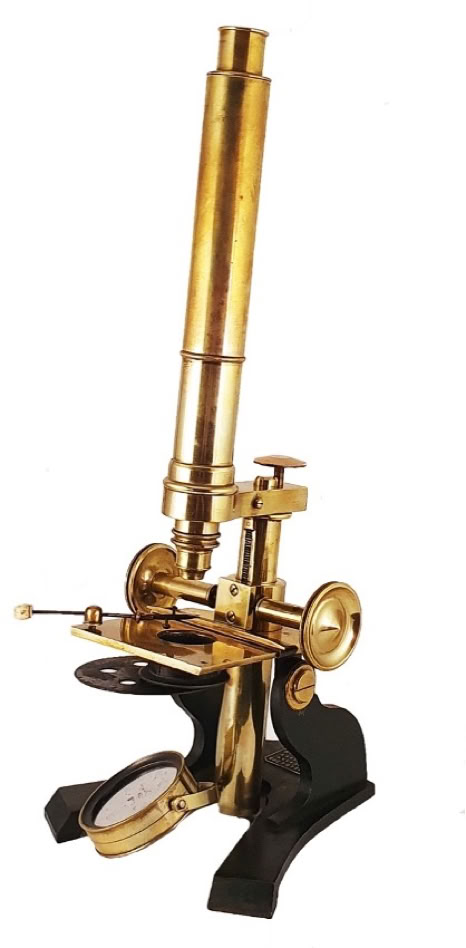
Microscope 29
(R Field & Son; student microscope; c. 1860)
Robert Field Sr. died in 1851, after which his son, Robert Field Jr., continued the business under the name R. Field and Son. Robert Jr. probably sold the business in the early 1870s and died in 1883, aged 54. R. Field and Son is particularly well known for the awards it received from the Society of Arts in 1855. The London-based society invited manufacturers to submit two types of microscope, and Field won first prize in both categories (Figure 1). The first was a compound student microscope, to be sold for no more than three guineas. The second was a simpler, mechanically and optically designed school microscope, priced at no more than 10 shillings and sixpence. The firm also offered a compound version of the school microscope, presumably at a higher price. The design of Field’s award-winning compound student microscope became extremely popular and was widely copied by other manufacturers. It subsequently became known as the Society of Arts pattern. In addition to these affordable educational instruments, the Field businesses manufactured more sophisticated and expensive microscopes, as well as a wide range of other scientific and mathematical instruments.
Microscope 29 is an example of R. Field and Son’s student microscope based on the design that won the Society of Arts award in 1855. The base is signed ‘R Field & Son, Opticians, New Street, Birmingham’. This inscription dates the instrument to approximately 1860, when the firm was still operating from its New Street premises.
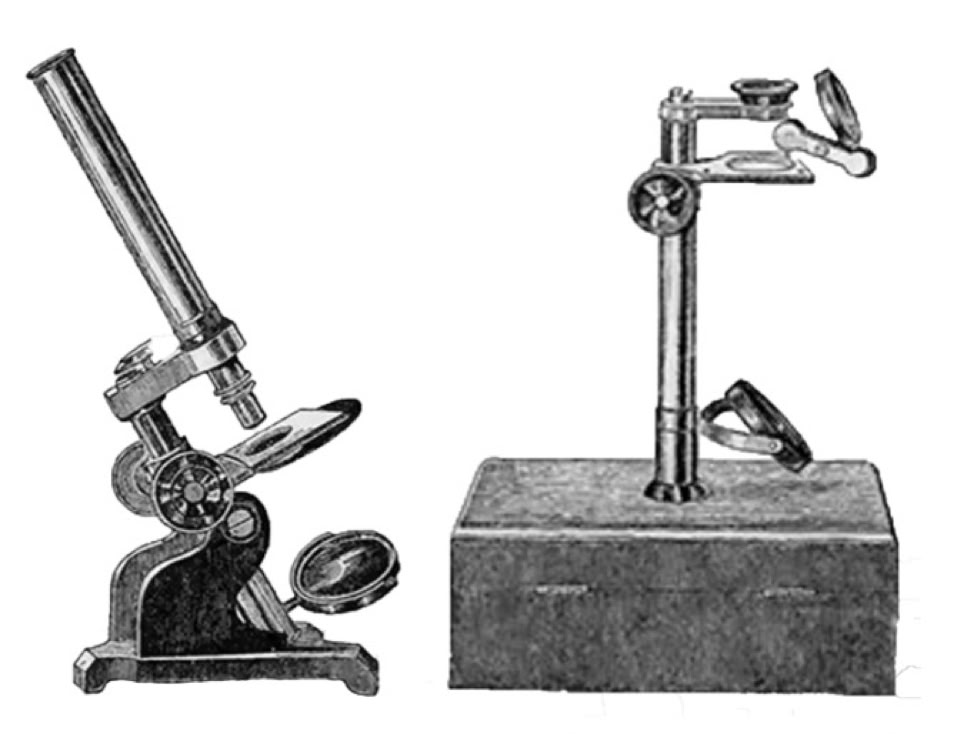
Figure 1. R. Field & Son’s award-winning microscopes: the compound student microscope (left) and the simple school microscope (right), as illustrated in the 1868 edition of W. B. Carpenter’s The Microscope and Its Revelations.