


Microscope 231
(Nachet; microscope de dissection et d'observation; 1880s)
Camille Sébastien Nachet (1799–1881) began his career working with the Parisian instrument maker Charles Chevalier before establishing his own business in 1839. By this time, Chevalier, Georg Oberhaeuser and Nachet were among the principal microscope manufacturers in Paris. In the late 1850s, Nachet was joined by his son, Jean Alfred Nachet (1831–1908), commonly known as Alfred. Around 1862, when Alfred became a partner, the firm adopted the name Nachet et Fils. Following Camille's retirement and subsequent death, Alfred continued the business, trading under the name A. Nachet from approximately 1880 to 1890. When Alfred's son joined the partnership around 1890, the firm reverted to the name Nachet et Fils. By 1898, the company had acquired the businesses of Hartnack & Prazmowski and Bézu, Hausser et Cie, consolidating its position among the leading Parisian microscope manufacturers. The firm's premises included Rue Serpente (1839–1862), Rue Saint-Séverin (from 1862 until after the Second World War) and, during the 1970s, 106 Rue Chaptal in Levallois-Perret.
Microscope 231 is engraved ‘NACHET ET FILS, 17 Rue St. Severin, Paris’ and dates from the 1880s. It appears to be a version of Nachet's Microscope de dissection et d'observation, described in the firm's 1886 catalogue (Figure 1). A similar microscope was reportedly used by Louis Pasteur in his experiments investigating spontaneous generation.
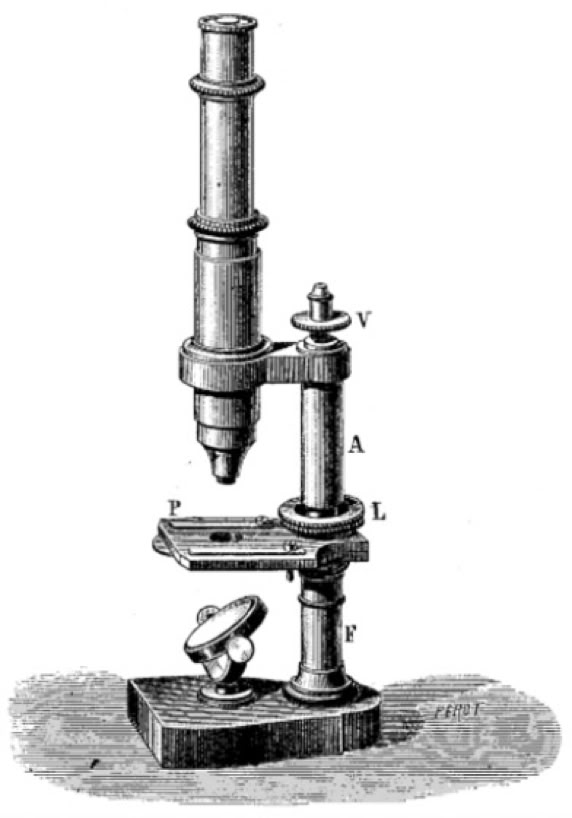
Figure 1. Nachet’s ‘Microscope de dissection et d’observation’, as described in the firm’s catalogue from 1886