
Microscope 227
(Hartnack & Prazmowski; microscope stand III-A; c. 1880)
The origins of Hartnack & Prazmowski can be traced to the Parisian optical instrument business established by Georg Oberhaeuser, who popularised the drum microscope design associated with Martin and developed the characteristic Continental microscope stand with its horseshoe-shaped foot. Oberhaeuser established his business around 1830, operating from 19 Place Dauphine, Paris, by 1832. In 1854, he entered into partnership with his assistant, Edmund Hartnack, who had joined the business in 1847. Oberhaeuser retired shortly afterwards, and the firm traded as Oberhaeuser & Hartnack until 1859, when Hartnack became its sole proprietor and continued under the name Hartnack. In 1870, following the outbreak of the Franco-Prussian War, Hartnack left France and established a new business in Potsdam, near Berlin, retaining the Hartnack name. The Paris operation continued independently, initially as Hartnack et Cie and, from 1873, as Hartnack & Prazmowski, relocating that year to 1 Rue Bonaparte. In 1878, Adam Prazmowski became the sole proprietor of the Paris business. In 1883, he transferred it to his employees, Bézu and Hausser, who continued trading as Bézu, Hausser et Cie while retaining Prazmowski's name until his death in 1885. The business was eventually sold to Alfred Nachet in 1896. Meanwhile, Hartnack's Potsdam enterprise continued operating after his death and remained active well into the 20th century.
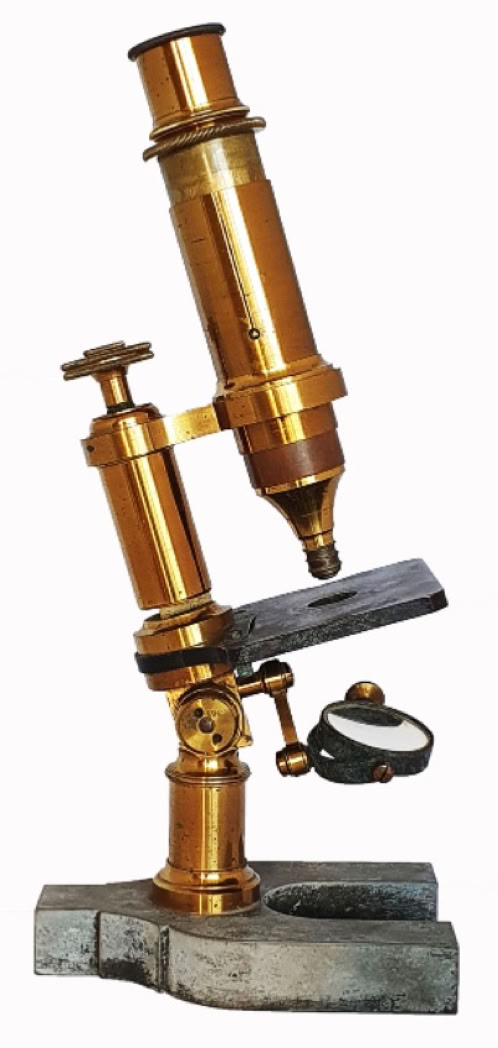
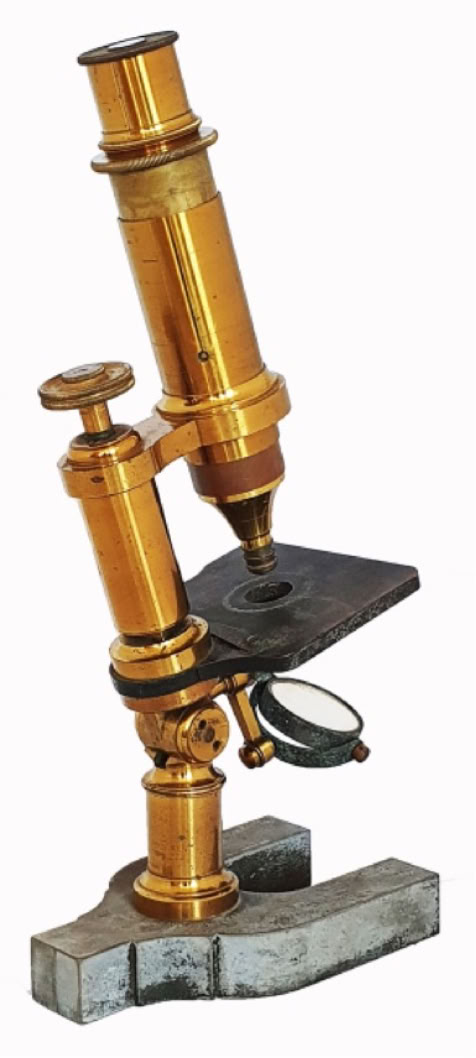
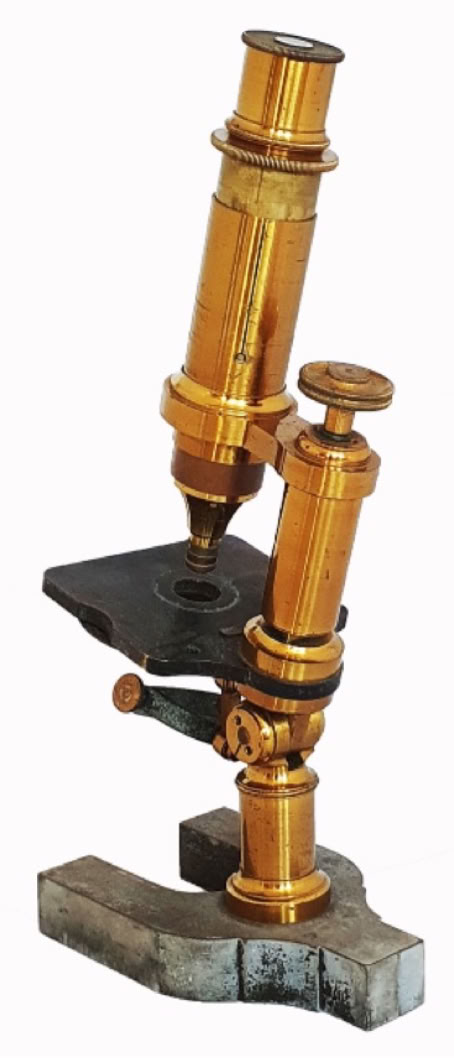
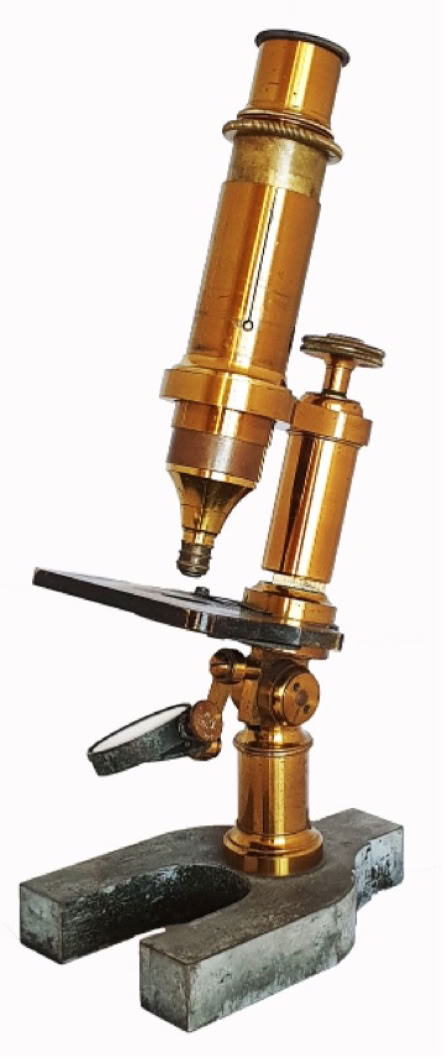
Microscope 227 was manufactured by Hartnack & Prazmowski and is identified as Stand III-A (Figure 1), dating from approximately 1880. The draw tube is engraved ‘Mon E. Hart. & A. Praz., A. Prazmowski sucr, Rue Bonaparte 1, Paris’, identifying Prazmowski as Hartnack's successor in the Paris business. The instrument survives with its original wooden case, which is also engraved with the serial number 19904.
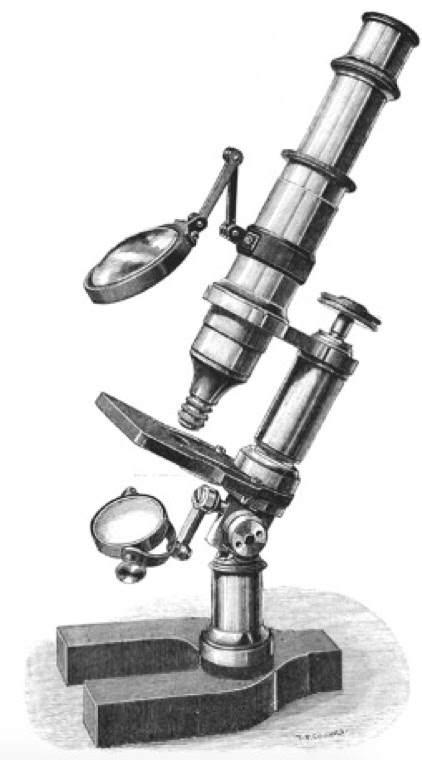
Figure 1. Hartnack & Prazmowski’s stand III-A microscope as engraved in William Rutherford’s “Outlines of Practical Histology” (1875)