


Microscope 204
(R & J Beck; microscope model 22; early 1920s)
R. & J. Beck occupies an important place in the history of British microscope manufacturing. The firm originated in London through the association of Richard Beck (1827–1866) with James Smith (1800–1873), and was later joined by Richard’s brother, Joseph Beck. The Beck brothers were nephews of Joseph Jackson Lister, the respected British optician and physicist whose pioneering work on achromatic lenses contributed significantly to the development of the modern optical microscope. In developing his improved microscope, Lister commissioned James Smith, then employed by the instrument-making firm of William Tulley, to manufacture the stand. Smith subsequently established his own optical instrument workshop in 1837. Through Lister’s influence, his nephew Richard Beck began an apprenticeship with Smith in 1843. In 1847, Smith and Richard Beck entered into partnership, establishing Smith & Beck. The firm was renamed Smith, Beck and Beck in 1854, following Joseph Beck’s admission to the business in 1851. When Smith retired in 1865, the company adopted the name R. & J. Beck, which it retained for many decades. Richard Beck died prematurely in 1866, aged 39, and Joseph continued to manage the business. In 1895, the firm became a limited company under the name R. & J. Beck Ltd. By 1968, it had become a subsidiary of the American Ealing Corporation. In 2019, Beck Optronic Solutions Ltd represented a successor to the historic R. & J. Beck business.
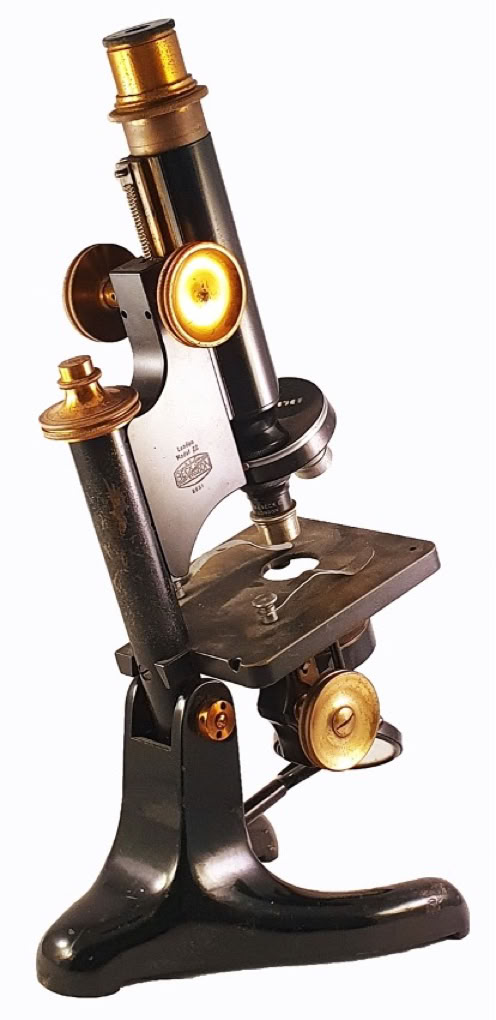
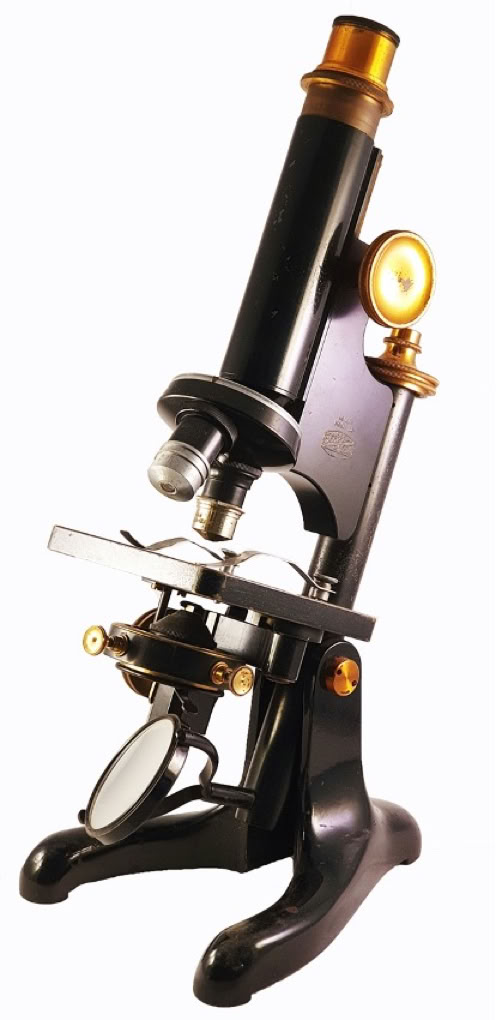
Microscope 204 is a Beck Model 22, dating from the early 1920s (Figure 1). According to an early 20th-century R. & J. Beck catalogue, the Model 22 was a general-purpose instrument intended for educational institutions and medical applications. Its base and pillar were formed from a single, heavy iron casting, with a broad footprint designed to provide stability whether the microscope was used in the vertical, inclined or horizontal position. The stage was large, robustly constructed and rigidly attached to the microscope’s limb. The coarse-focus mechanism operated through a helical rack and pinion, while fine focusing was controlled by a large milled-head adjustment. The standard-length body tube incorporated an extending drawtube, and a double mirror, with plane and concave surfaces, was fitted to the lower end of the limb. Model 22 microscopes were supplied with either a revolving, dome-shaped diaphragm containing apertures of different sizes or a substage assembly incorporating a diaphragm and condenser. Stage clips secured the specimen slide in position. The instrument bears the serial number 5051.

Figure 1. Beck’s model 22 microscope (adapted from an early 20th Century R & J Beck Ltd catalogue)