
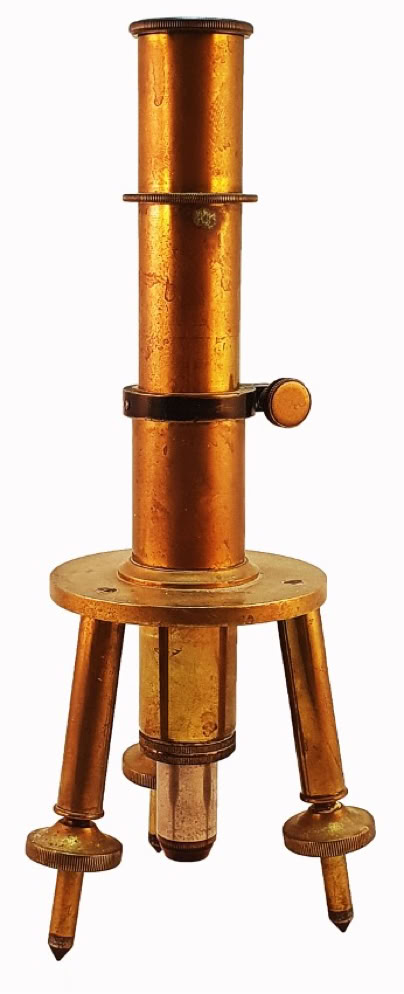


Microscope 178
(J Swift & Son; Stead workshop microscope; c. 1915)
James Swift was a London-based microscope manufacturer founded in 1853 by James Powell Swift, the son of watchmaker Thomas Swift. Before establishing his own business, James Powell Swift served an apprenticeship with the renowned microscope maker Andrew Ross. In 1881, the firm introduced improvements to microscope design, including helical-cut rack-and-pinion components and a new fine-focus mechanism. In 1884, the founder’s son, Mansell James Swift, joined the business, which was renamed James Swift & Son. In 1901, Captain Robert Falcon Scott was supplied with Swift microscopes for use aboard the R.R.S. Discovery during the 1901–1904 Antarctic expedition. The instruments included the ‘Discovery’ model, as identified in the company’s catalogue at the time. In 1903, the founder’s grandson, Mansell Powell John Swift, joined the firm. James Powell Swift died in 1906, and in 1912 the business was incorporated as J. Swift Ltd. Following the deaths of Mansell Powell and Mansell James in 1942, the company was acquired by E.R. Watts & Son Ltd in 1946, partly reflecting the longstanding association between the Watts and Swift families. In 1949, the company employed John H. Basset, who subsequently took over the business in 1968.
Microscope 178 is a J. Swift & Son Workshop Microscope, bearing the inscriptions ‘J. SWIFT & SON, LONDON’ and ‘WORKSHOP MICROSCOPE’. It can be dated to around 1915. The instrument was designed for engineers, iron and steel foundry workers, and others working with metals. As the specimens examined were opaque, no substage illumination apparatus was required. The microscope is mounted on a tripod whose legs can be extended or shortened by rotating the milled heads, allowing the instrument to be adjusted to uneven surfaces. The optical tube slides through a fitting in the central plate of the tripod to achieve focus and can be secured using a small clamping screw. The original equipment included a vertical illuminator comprising a reflector, lamp and battery (Figure 1), which is missing from this example. According to the seller, the microscope originally belonged to an engineer employed by the shipbuilding company Swan Hunter, based in Wallsend, Tyne and Wear, England. Swan Hunter was responsible for building several notable ships of the early twentieth century, including the RMS Carpathia, launched in 1901 and later renowned for rescuing survivors of the RMS Titanic disaster, and the RMS Mauretania, launched in 1906.
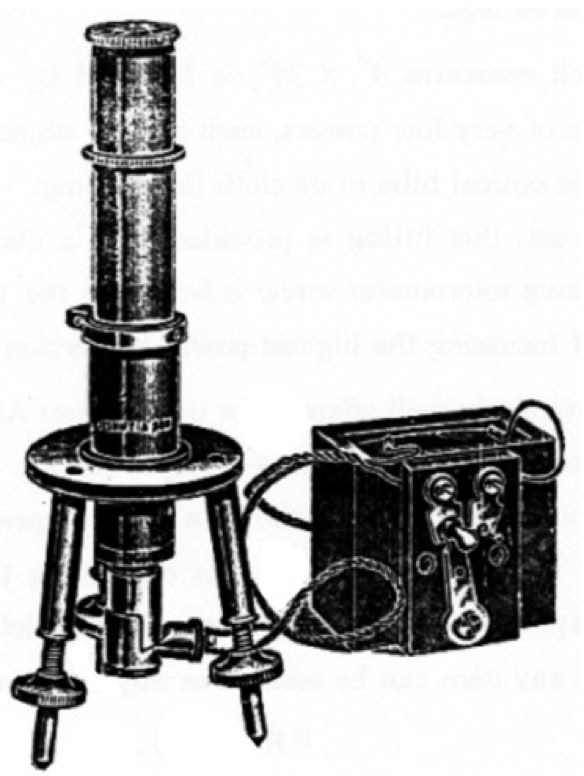
Figure 1. Workshop metallurgical microscope originally designed by JE Stead and made by J. Swift & Sons as engraved in the company’s 1914 catalogue.