

Microscope 115
(Carl Zeiss; microscope stand Va; 1886)
In 1846, Carl Zeiss established a workshop for precision mechanics and optical instruments in Jena, Germany. The business increasingly specialised in microscope production and soon expanded beyond the regional market, supplying instruments internationally. In 1866, Zeiss recruited the physicist Ernst Abbe to improve the optical performance of his microscopes. Abbe became a partner in 1877, contributing fundamental scientific advances to microscope design and optical theory. Following Carl Zeiss's death in 1888, Abbe established the Carl Zeiss Foundation in 1889, which subsequently became the company's sole owner. From the 1890s onwards, Abbe's scientific discoveries and systematic approach to research and development were applied to other fields of optics, enabling the company to introduce new products, expand into new markets and grow rapidly. In 1893, Carl Zeiss opened its first foreign subsidiary in London. Before the outbreak of the First World War, the company had established operations in several countries, many of which were forced to close when war began. The decades that followed brought further challenges, particularly during the Second World War and its aftermath. Subsequently, the company's international operations gradually recovered and expanded. Today, Carl Zeiss AG is the holding company of a group of subsidiaries operating across several optical and technological fields. In addition to its sites in Jena and Oberkochen, Germany, the group's major production facilities extend to other locations, including Wetzlar and Göttingen in Germany, Dublin in Ireland, Minneapolis in the United States, and Shanghai in China.
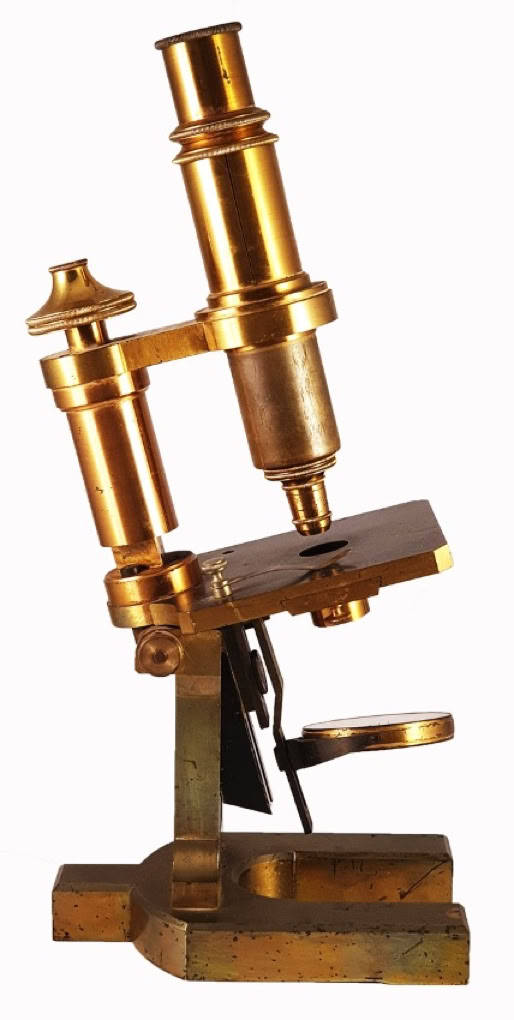
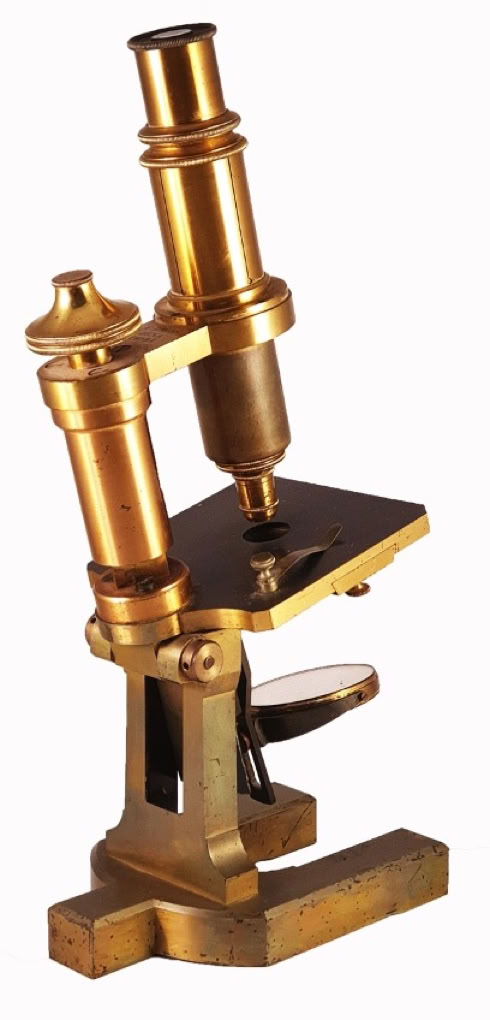
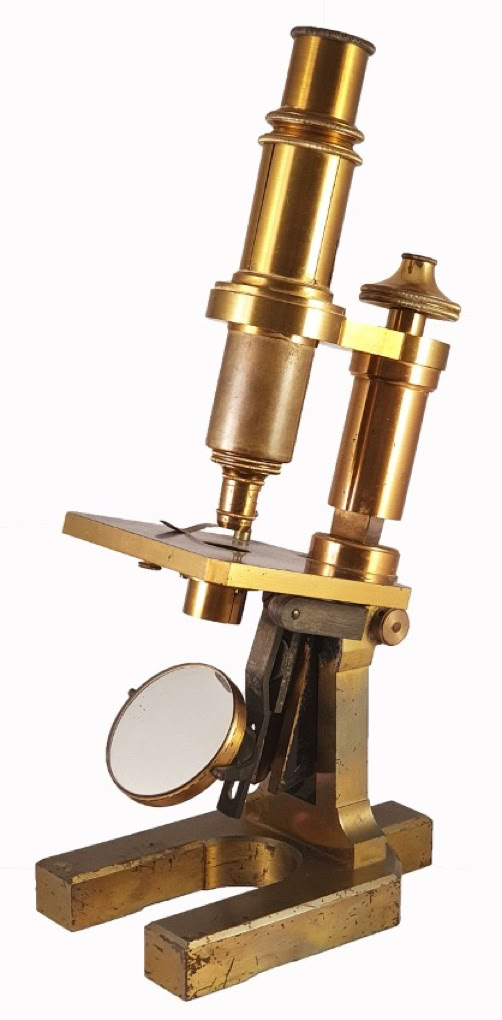
Microscope 115 is a Carl Zeiss instrument bearing serial number 10263, dating from 1886. It is identified as stand Va in the company's 1885 catalogue and could be supplied with an Abbe illuminator as an optional accessory (Figure 1).

Figure 1. Carl Zeiss’s stand Va microscope as engraved in the company’s 1885 catalogue (No. 27).