
Object 105
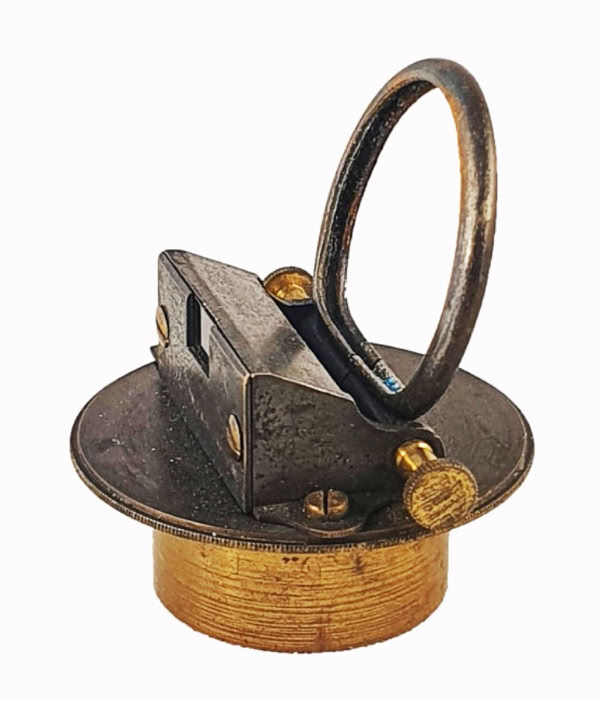
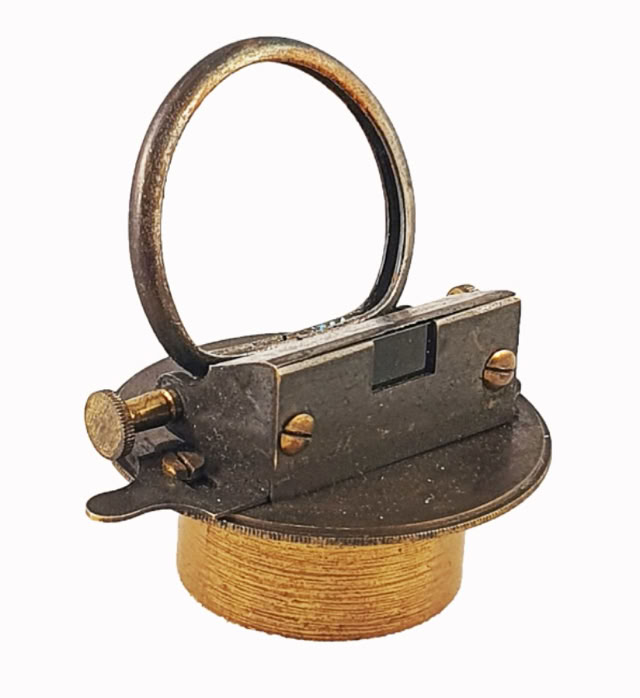
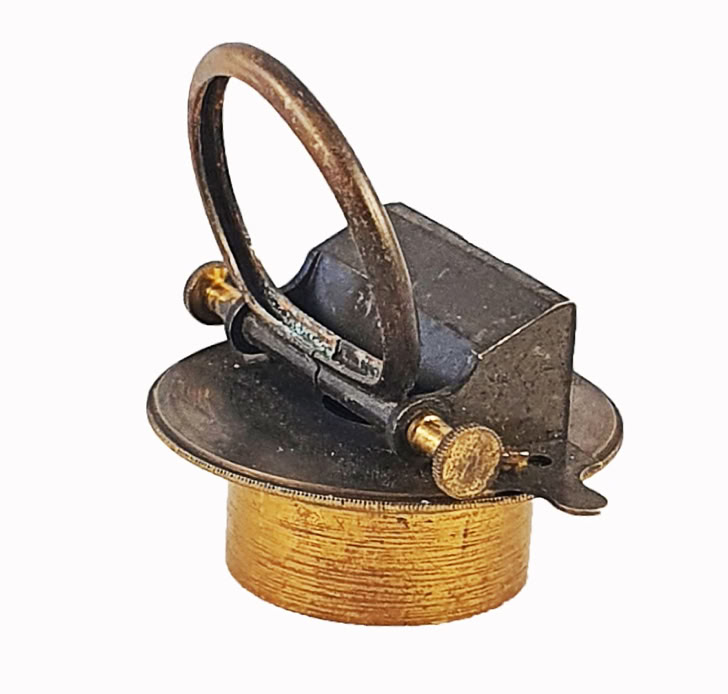
Camera lucida Wollaston-type
A Wollaston-type camera lucida is a scientific drawing instrument dating from the second half of the nineteenth century. A camera lucida is an optical device designed to facilitate accurate drawing by allowing the observer to view both the specimen and the drawing surface simultaneously, with the two images optically superimposed.
The principle of the camera lucida was first described by Johannes Kepler in 1611, although practical instruments were not developed until the early nineteenth century. Several designs subsequently emerged, with the Wollaston type becoming one of the most widely used. Invented and patented by William Hyde Wollaston in 1807, this design employs a specially shaped prism positioned above the observer's eye. By looking through the edge of the prism, the user can simultaneously see the reflected image of the specimen and the drawing paper directly, enabling the specimen to be traced with considerable accuracy. The camera lucida quickly became an important tool for scientists, naturalists and artists, and was subsequently adapted for use with microscopes. Early microscope-mounted versions generally consisted of a prism fitted to a replacement eyepiece cap, allowing microscopic specimens to be drawn accurately, particularly before photomicrography became widely available. This instrument follows the basic Wollaston design but incorporates an additional frame designed to accommodate optical filters.